
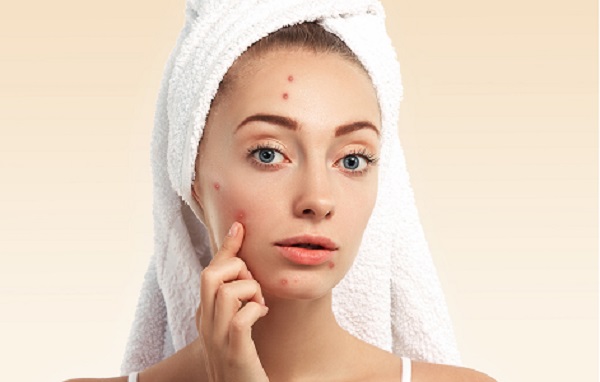
Acne Vulgaris is one of the most common skincare concerns. Acne does not have a certain age group or gender or race that it is particularly allied to hence it does not discriminate. It can be a daily struggle for people who live with this skin condition.

Acne appears as an outbreak of pimples on the face, chest, neck, back, or shoulders. While the other places where acne appears can be covered up with clothes, you cannot cover up your face all the time. This often makes people feel self-conscious and can affect their mood. Acne can also make you feel uncomfortable in social settings thus making socializing more difficult for you.
What causes Acne?
Acne occurs when a pore is clogged with dead skin cells and oil which leads to the skin getting infected or inflamed. Sebum is an oil that is produced by a system of oil glands under the skin. It keeps the skin naturally moisturized on a daily basis but if it is produced way too much, it can cause blackheads and whiteheads. The oil is normally pushed through the hair follicle but if it gets attached to bacteria or dead skin cells in the process, it can easily clog the pores. This sebum build-up behind the plug forms a pimple.
There is no such thing as growing out of acne as acne does not attack a particular age group. Genetics and hormones are the two leading causes of acne occurrence. Treating it is the only way of combating acne menace but you first have to find the right treatment that works for you.
Types of acne treatments
A dermatologist usually starts by prescribing lotions, cream, gel, or soap that contain ingredients that can help in fighting acne such as;
- Benzoyl peroxide: This removes extra oil and also kills the bacteria
- Salicylic acid: It keeps the pores from getting clogged
- Sulfur: This element removes dead skin cells
- Birth control pills: It is usually prescribed for women who develop acne due to hormones
- Antibiotics: This kills bacteria
- Isotretinoin: This reduces the oil that the body naturally makes
Sometimes your dermatologist can combine both oral and topical medication to obtain optimal results. You should continue with your medication even when the acne blemishes fade. Your dermatologist will advise on when or how to stop the medication.
Other types of treatment include;
- Laser treatments that are used to treat the blemishes
- Surgical procedures to remove the cysts that cannot be treated with medicine
- Chemical peels which remove dead skin cells
Other than that, you can take care of your skin by;
- Washing the acne-affected area 2 times a day with a mild soap
- Using oil-free makeup and sunscreen
- Avoid picking or squeezing the pimples as this can easily lead to acne scars
Remember that not all acne treatments will work the same way and that you will probably have to try a couple of solutions before you settle for the one that does work. Before settling on a certain treatment it is important to consult a qualified dermatologist or practitioner.
To Know More
Would you like to understand what options are available for Acne Treatment in Dubai? Meet one of our experts at Al Shunnar Plastic Surgery for a personal consultation to develop a tailor-made plan for you. Contact us or Book an appointment and our patient care coordinators will identify the most suitable expert for you.